
Get to Know Our Board
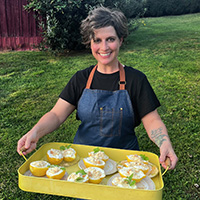
Dr. Sarah Long
Executive Director, President
Dr. Sarah Long is president and Executive Director of Slow Food Tri-Cities. A Professor of Writing at Appalachian State University, Sarah is also a therapeutic writing consultant, author of the memoir Uprooted: A Memoir of Belonging and Becoming, and TEDx speaker. Her professional and community service bridges food justice, narrative medicine, and sustainable agricultural advocacy.
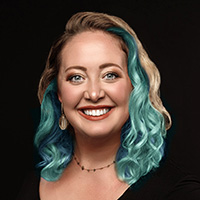
Ashley Cavender
Board Member
Ashley Cavender, Equitable Nutrition & Food Access Director A native to East Tennessee and an ETSU Alumni, Ashley Cavender is elated to be in this role and to work on meaningful initiatives that focus on local food and dignified access. She is inspired by grassroots agriculture movements, educational programming, and sustainable conservation efforts. Ashley garners support and community connections to leverage access to healthy local foods in low-income communities.
With over a decade of non-profit management, event organizing, fundraising, and volunteer management, Ashley is passionate about engaging and educating people from diverse backgrounds to grow and consume local healthy foods. Prior to this position, Cavender was employed by Visit Johnson City as their Event Coordinator and was Director of Meet the Mountains Festival. Before that she served as the Volunteer and Development Coordinator for One Acre Cafe, a community cafe. Her passion for food systems blossomed while attending ETSU where she fell in love with the local agriculture community and ETSU Farmers Market. From there, she found her home in Jonesborough and served as the market manager for Jonesborough Locally Grown for a number of years. When she is not working or volunteering, you will find her on the Nolichucky River with her Jack Russel, Banjo. She enjoys gardening, cooking, and trying new things. She loves being outdoors and traveling abroad any chance she gets. But Appalachia is her home through and through. Connect: 423-427-0547 / ashley@arcd.org
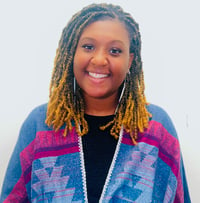
Dr. Aliyah Smith
Board Member
Dr. Aliyah Smith, of Mobile, Alabama works in public health and through her nonprofit Project Manna, connect Black farmers in Appalachia with Black mothers, nourishing families while empowering local agricultural communities. Aliyah is a public health scholar and community advocate dedicated to advancing health equity through research, education, and systems transformation. She is the founder of Project MANNA, a regional initiative connecting Black mothers with Black farmers to promote food access, nutrition, and maternal health equity in Appalachia. Her doctoral research “Weathering More Than Storms: Understanding the Mental Health Disparities of Black Farmers in the
Appalachian Region,” examines the mental health and well-being of Black farmers in Appalachia. Her work centers on supporting Black farmers in Appalachia and advancing their mental health and long-term sustainability within the agricultural system.
Project MANNA, which Dr. Smith-Gomis started and directs, connects Black farmers with Black mothers who are in the perinatal period to provide fresh, culturally-relevant, nutrient-rich foods at no cost. Our mission is simple but profound: to nourish Black mothers during the most sacred moments of their lives while empowering Black farmers and reclaiming the healing power of food. Through curated produce boxes, culturally-relevant nutrition education, and direct support from local Black farmers, Project MANNA delivers not just food—but dignity, care, and connection. We believe that nutritional value for maternal health starts with what’s on the plate and who grew it.
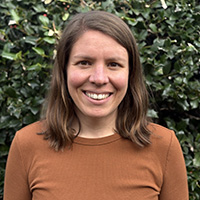
Rachel Kinnard
Board Member
Rachel Kinard discovered her interest in regenerative food systems while volunteering on a farm in her early twenties. Since then, she has spent over a decade farming vegetables, running her own farm in Western North Carolina, and working with farms along the East Coast and in Minnesota.
When Rachel took her skills into the non-profit profession, she managed farmers' markets, organized food access programs, and coordinated farmer services programs. Most recently, she worked with farmers in Appalachia to help them implement conservation practices. Rachel earned a Master’s degree in Sustainable Food Systems from Prescott College and serves on the board of Dig In Yancey, a food access nonprofit in Burnsville, NC.
Ren
Board Member
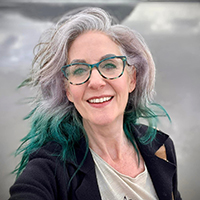
Ren Allen is a longtime artist with decades of full-time work in makeup and bodypainting regionally and beyond. She now serves as the manager of a local nonprofit, "The Philosopher's House" where she programs events with a mission focused on multiculturalism and environmentalism. She is a master gardener and has also worked and volunteered at various farms most of her adult life, with a current passion for flower gardening and foods focused on plants indigenous to Southern Appalachia. Ren is currently a student at Northeast State Community College, working towards an AA in Anthropology, and plans to get her BA in Anthropology from ETSU, eventually focusing on Foodways.
Kim Bushore-Maki
Board Member
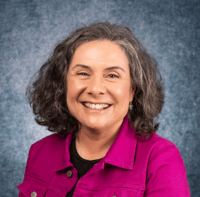
For nearly thirty years, Kim Bushore-Maki has served Appalachia as both a pioneer and champion of holistic well-being and community health. A licensed clinical counseling professional, she became the first Master level clinician at East Tennessee State University's Counseling Center, where she provided therapeutic services and directed the Sexual Violence Prevention Program and the Alcohol and Drug Prevention Program. During her tenure at ETSU, she was a founding organizer of the Tennessee Coalition for Healthy and Safe Campus Communities as well as Tennessee's representative for the National Prevention Network. Kim worked closely with her colleagues in Public Health to coordinate campus-wide events such as "Well-a-palooza" and to conduct mental health screenings.
In 2010, Kim followed her intuition and vision to found Shakti in the Mountains, a thriving healing-arts center that draws on somatic expressive therapy, archetypal psychology, wisdom traditions, and regenerative economics. Kim continues to maintain a small private therapy practice and also leads healing programs and retreats, guides the Shakti Stewardship Program, supports a community garden, and serves as a community-building consultant to justice-oriented initiatives committed to building safe, inclusive, vibrant, and resilient communities.
Deborah Byrd
Board Member
Deborah Byrd is the Executive Director of Jonesborough Locally Grown, the non-profit operating Boone Street Market and Jonesborough Farmers Market. She is dedicated to strengthening connections between local farmers, food, and community. Deborah brings a diverse background in agriculture, having worked as a grower at Serenity Knoll Farm and with Farms Work Wonders at Wardensville Garden Market.
.png?width=200&height=100&name=Untitled%20design%20(5).png)
Nathan Tyler
Board Member
Nathan Tyler, owner and operator of Southern Culture LLC. Southern Culture Cuisine was born from the soap-slicked floors of The Starving Artist Café, where dreams and dirty dishes collided in equal measure. Picture a 15-year-old dishwasher, wide-eyed and unaware, stepping into the culinary underworld. Chef Shawn Crookshank, part sage, part pirate, handed over an apron with a raspy laugh and a motivational speech that teetered on the edge of sobriety. By the end of the night, Chef Roger Goodson was tossing beers my way like they were rewards for surviving the chaos. This was no ordinary introduction to the food world—this was initiation by fire, steam, and the faint promise of something bigger. In the immortal words of Hunter S. Thompson, “I bought the ticket, and I took the ride.” The journey out of small-town Appalachia to Charleston, South Carolina, felt like a culinary escape act. Johnson & Wales dangled the illusion of a traditional education, but Charleston’s kitchen trenches delivered the real schooling. Days evaporated into nights, and nights turned into folklore, as chefs like Chris Brant and Fred Neuville hammered the truth into my skull: passion and chaos fuel this industry. The Lowcountry’s pluff mud became the backdrop for a baptism of heat, salt, and smoke. Every shift was a chapter in a wild saga of culinary sin and redemption, and every scar was a badge of honor.
Southern Culture Cuisine’s true origin story didn’t happen in a single kitchen, but in the realization that food could be more than fuel or art. It could be connection, rebellion, and salvation. After years of grinding through kitchens, the spark reignited with guerrilla-style dinner parties. These were no ordinary meals—they were clandestine festivals of music, art, and unholy indulgence. It became clear: food wasn’t just a dish, it was a bridge between people and their passions. The idea for Southern Culture emerged from this chaos—a company that could connect the dots between farmers, chefs, and the communities hungry for authenticity. What started as a scrappy sushi business has transformed into a full-blown operation: Southern Culture Cuisine Appalachian Produce & Food Service Provisions. Today, it’s a lifeline for local farmers and a beacon for chefs seeking soul in their ingredients. We’re not just delivering produce; we’re delivering the poetry of Appalachian fields and the promise of a shared table. It’s messy, imperfect, and gloriously human—a rebellion against the sterile world of mass production. The mission is simple: honor the land, uplift the people, and throw one hell of a dinner party along the way.